The Classical Pilates Method
Joseph Pilates first called his method Contrology, the science of control. Its exercises use specialized equipment to build strength and flexibility through uniform muscle development, core strength and movement.
Classical and contemporary Pilates
Unlike contemporary or modern Pilates-based exercises, Classical Pilates is the specific routine Joseph Pilates developed and practiced himself. It includes the Reformer, as one part of the full system.
The Order
Classical Pilates follows a set order of exercises, the routine Joseph Pilates developed. New students learn the Order in their fifth lesson. Foundational groups work in it, and the later levels add transitions and increased timing.
The equipment
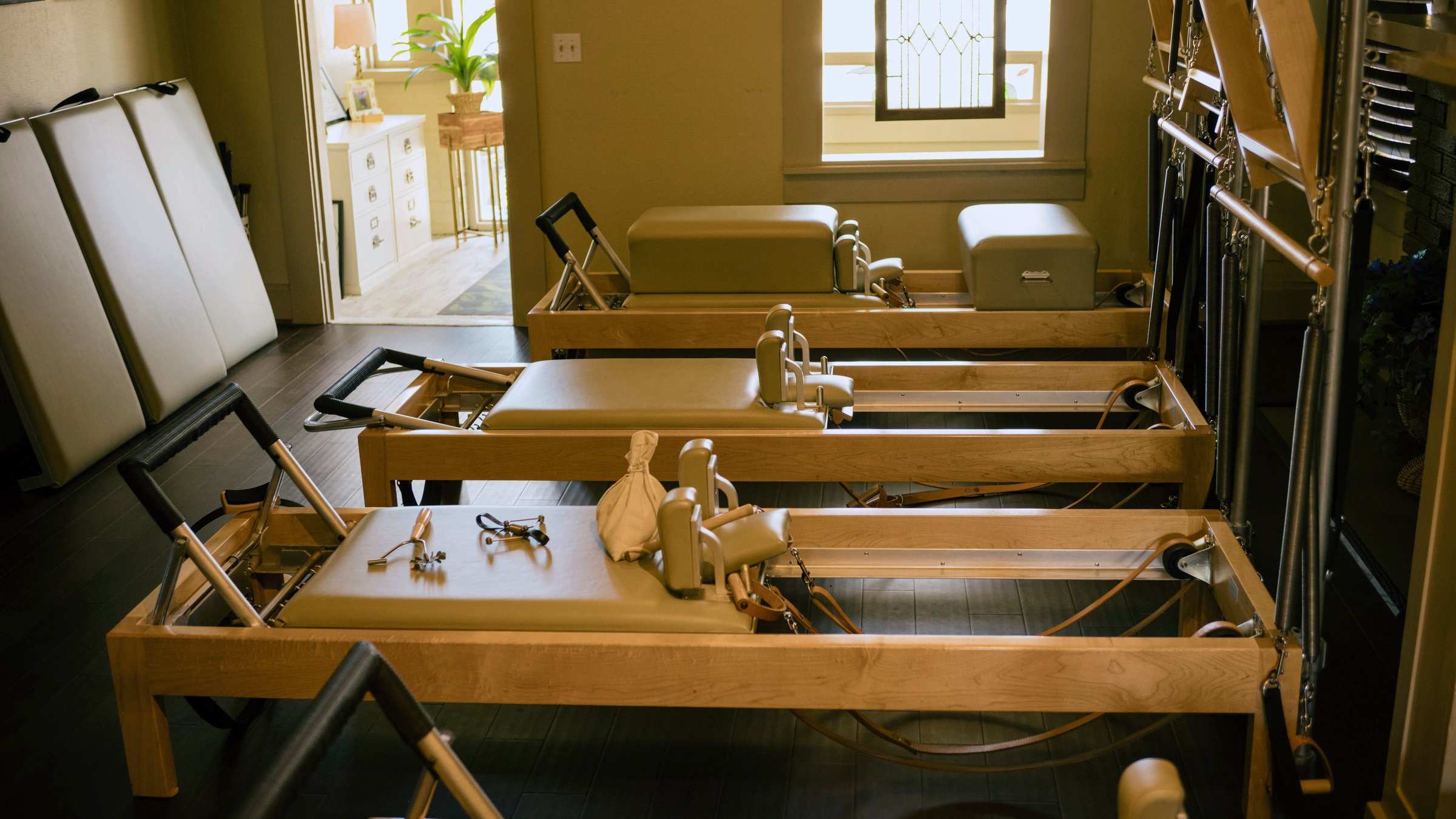
Springs, bars and paddles support the body around the spine, for strength, breath and focus.
- Reformer
- A sliding carriage with springs and bars, for a wide range of exercises.
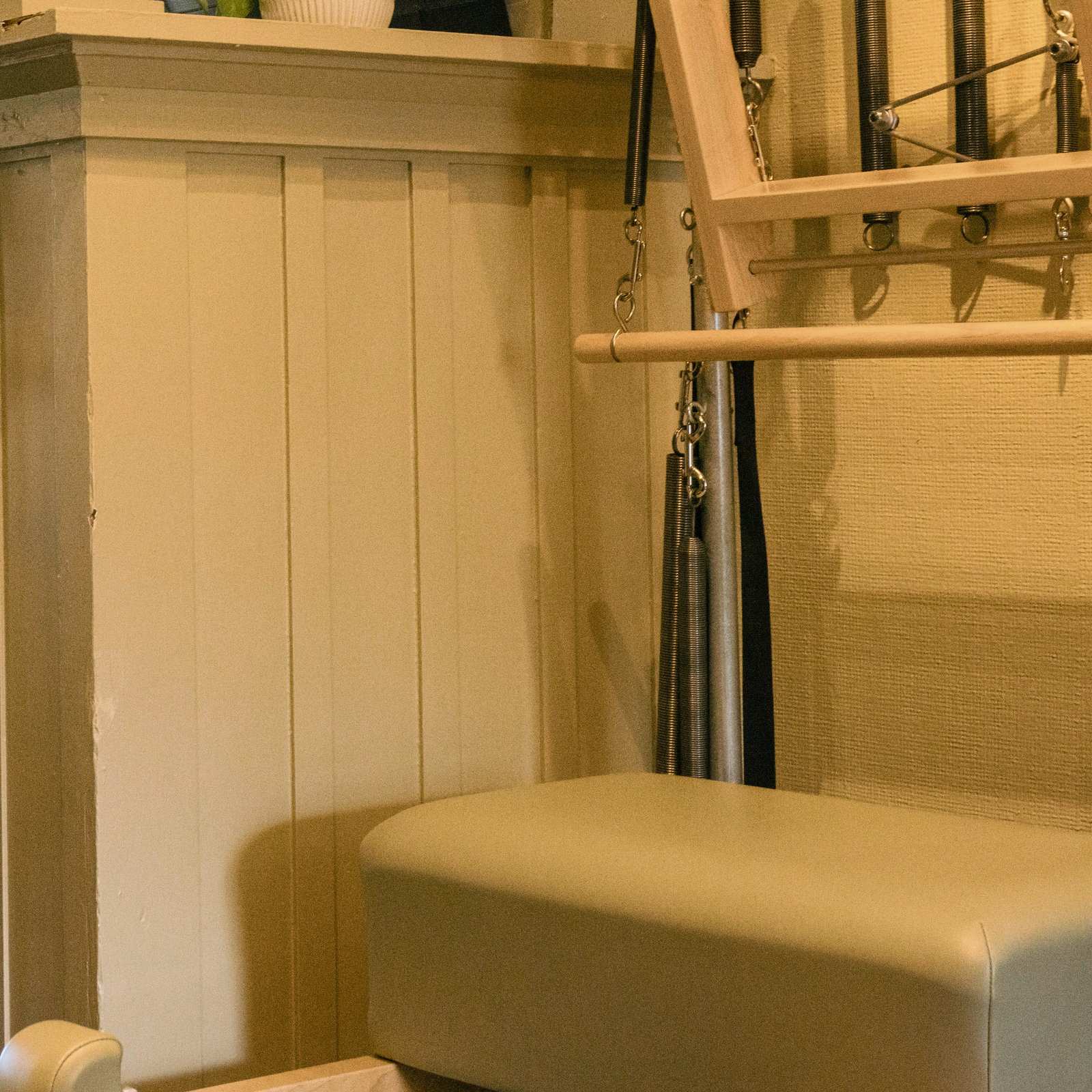
- Cadillac
- A table with springs, bars and a trapeze for support.
- Chair
- A compact piece with a large push paddle, for flexion in the spine.
- Barrel
- A stationary piece that deepens flexion and eases tension around the spine.
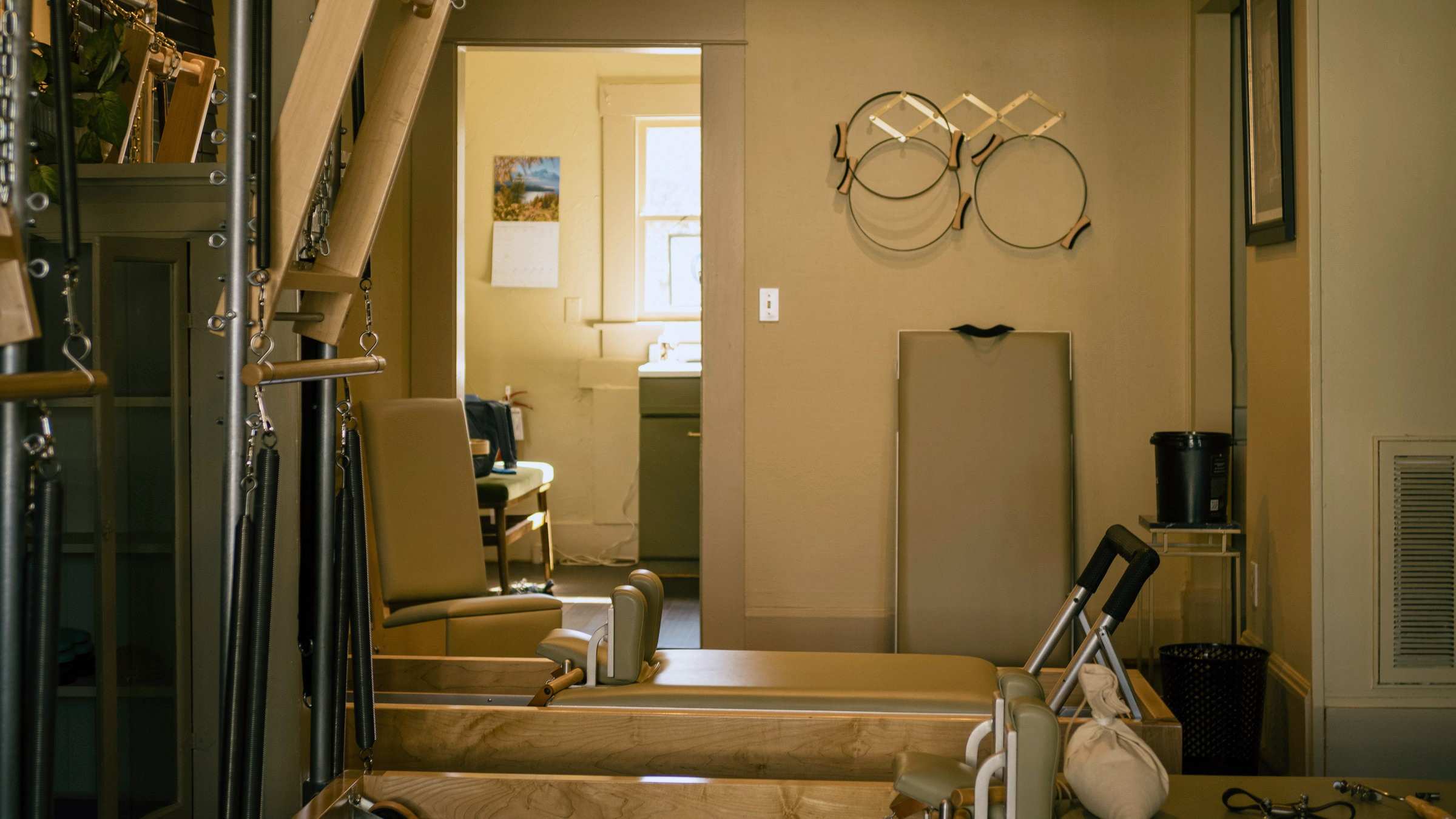
- Smaller pieces
- Bolsters, pillows and mats make exercises more comfortable. Rings and balls add a challenge.
Three levels
Groups meet by movement level, and each level builds on the one before it.
-
Foundational
- The Order
- The exercises
- The Hollow
- Whole-body work, introduced
- Breath, introduced
- The equipment
-
Emerging
- Everything in Foundational, plus:
- Everything Everywhere All at Once
- Whole-body work, all the time
- Advanced exercises, introduced
- Correct breathing
- Easier transitions, introduced
-
Seasoned
- Everything in Emerging, plus:
- Increased timing
- Advanced exercises
- Transitions
A history of the Pilates Method
GYMNASTIC APPARATUS · J. PILATES
PATENTED MAR. 15, 1927 · No. 1,621,477
The parts, as the patent names them
- aTrack
- bSliding carriage
- cUpright
- dCord
- eWeight
- fPulley
- lWheels
In the patent, a weight on a cord gives the resistance. It adds that springs could do the same job.
- 1883
- Joseph Pilates is born in Mönchengladbach, Germany, on December 9.
- 1912
- He moves to England.
- World War I
- In an internment camp, he begins a system of mat exercises he calls Contrology.
- 1925
- Back in Germany, he files a patent for a gymnastic apparatus. It issues on March 15, 1927.
- New York
- He and his wife, Clara, teach Contrology classes in New York City.
- Romana Kryzanowska
- An injured ballerina, she becomes his protégé and later inherits the Pilates Studio in New York.
- 1945
- His book Return to Life through Contrology comes out. He also wrote Your Health.
- The Pilates Center
- Romana helps build the teacher training program at The Pilates Center in Boulder, Colorado.
- Today
- Susan Mayo, a graduate of The Pilates Center's Bridge Program, teaches Classical Pilates in Bradenton.
Classical Pilates keeps the tradition of Contrology.
Body, mind and spirit
“Complete coordination of body, mind, and spirit.”
Rather than focus on one set of muscles, the exercises develop the body as a whole. The aim is to move well, breathe deeply and grow confident in your own abilities.
Start with an introductory session.
See how to begin